
Introduction
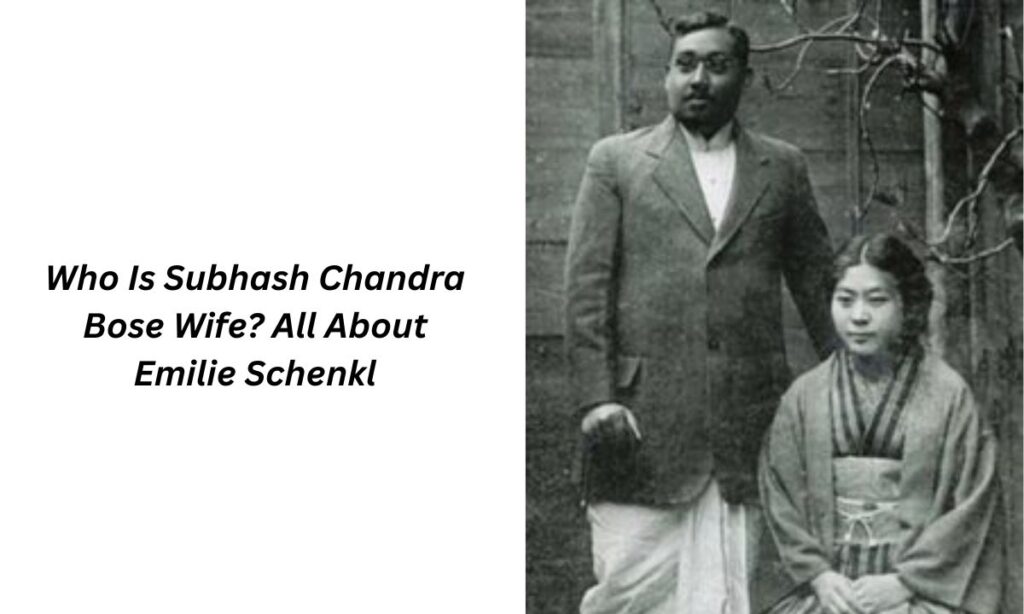
Subhash Chandra Bose wife is Emilie Schenkl, an Austrian stenographer and secretary born on December 26, 1910, in Vienna, Austria. Netaji Subhas Chandra Bose was one of the most prominent leaders of India’s independence movement and is remembered for his leadership of the Indian National Army (INA) and his powerful call for India’s freedom. Emilie Schenkl remained a largely private figure throughout her life, despite her connection to one of India’s most famous historical personalities.
Bose met Emilie in Vienna in 1934 while working on his book The Indian Struggle. She initially helped him with typing and secretarial work, but their professional relationship eventually developed into a close personal relationship. Historical accounts commonly describe their marriage as a secret ceremony, although the exact year is disputed among biographers.
This article explores Emilie’s early life, career, relationship with Bose, marriage, daughter, later years, and the facts surrounding one of the lesser-known chapters of Netaji’s personal life.
Who Is Emilie Schenkl?
Emilie Schenkl was an Austrian woman who became closely associated with Subhas Chandra Bose during his years in Europe. She was born on December 26, 1910, in Vienna, then part of Austria-Hungary. She came from an Austrian Catholic family. Her father was a veterinarian, while her paternal grandfather was a shoemaker.
Emilie’s early education was somewhat unusual. Her father was initially reluctant to send her to school. She eventually received formal education and later spent several years at a nunnery. Although she briefly considered becoming a nun, she ultimately chose a different path and completed her schooling at around the age of 20.
The economic difficulties of the Great Depression also affected her early adult life. After completing her education, Emilie experienced a period of unemployment before finding professional opportunities.
Her ability to type, take shorthand and work in English eventually proved important. In 1934, an Indian doctor living in Vienna, Dr. Mathur, introduced her to Subhas Chandra Bose. Bose needed a secretary who could help prepare the manuscript of The Indian Struggle, his work on Indian politics and the independence movement.
That meeting became the beginning of a relationship that would continue for nearly a decade.
Emilie Schenkl’s Career & Professional Life
Emilie Schenkl was primarily known for her work as a stenographer, secretary and telephone trunk-exchange operator. Her professional life was quite different from that of her famous husband. She did not seek political attention or public recognition and remained intensely private.
Her first significant connection with Bose came through her secretarial work. Bose had traveled to Europe while working on The Indian Struggle, and Emilie’s English, typing and shorthand skills made her suitable for the job.
Their professional association gradually became personal. Several historical accounts describe Bose and Emilie as developing a close romantic relationship while he was living and working in Europe.
After Bose left Europe for Southeast Asia in 1943, Emilie had to raise their young daughter largely on her own. The difficult post-war period required her to work to support herself, her daughter Anita and her mother. She later worked shifts at a telephone trunk office and became the main breadwinner of the household.
Unlike many people connected to famous political figures, Emilie did not build a public career around her relationship with Bose. There is no reliable public basis for assigning her a modern celebrity-style net worth. Her net worth has not been reliably documented, so estimates circulating online should be treated cautiously.
How Did Subhas Chandra Bose and Emilie Schenkl Meet?
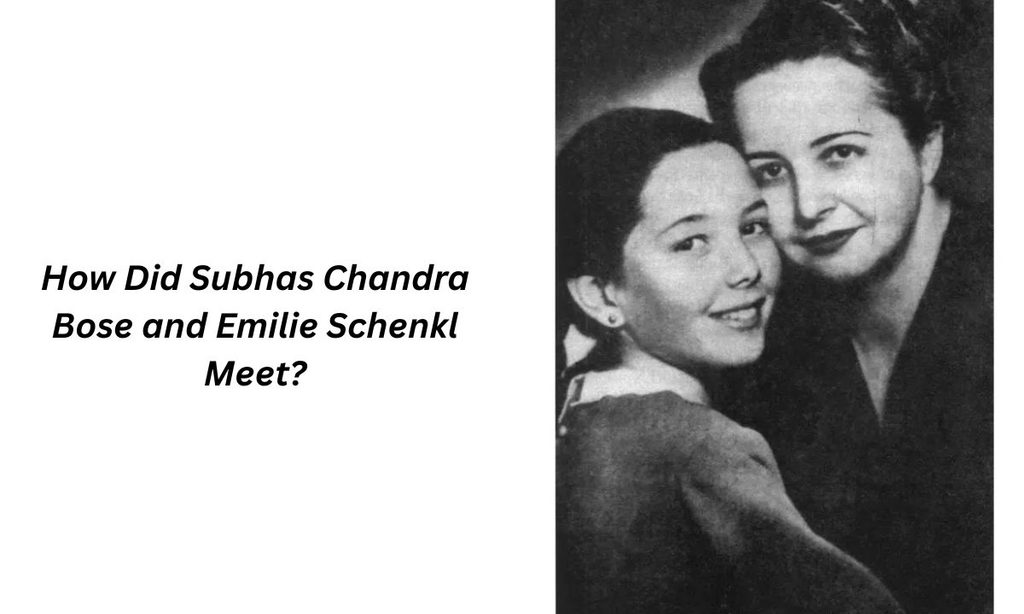
Subhas Chandra Bose and Emilie Schenkl first met in Vienna in June 1934, according to major biographical accounts. Bose was in Europe while working on The Indian Struggle and needed assistance with the manuscript. An Indian doctor, Dr. Mathur, introduced him to Emilie.
At first, their relationship was professional. Emilie worked as Bose’s secretary and helped him with typing and other tasks connected with his writing. Over time, however, their relationship became much deeper.
The couple spent periods together in Europe while Bose continued his political activities. They also remained connected through correspondence when they were separated. A collection of Bose’s letters to Emilie documents their relationship from 1934 to 1942.
The precise details of their marriage remain a subject of historical discussion. Emilie herself said that she and Bose secretly married according to Hindu rites in December 1937 in Bad Gastein, Austria. Krishna Bose’s biography also presents December 1937 as the marriage date.
However, some biographers have questioned the precise date and documentation because there was no conventional marriage certificate or independent witness record. Other accounts have suggested 1941 or 1942. Therefore, responsible biographies usually acknowledge the uncertainty rather than presenting one disputed date as unquestionably proven.
Marriage & Wedding Details
The marriage between Subhas Chandra Bose and Emilie Schenkl was extremely private.
According to Emilie’s own account and several biographies, they married secretly in Bad Gastein, Austria, in December 1937, reportedly according to Hindu rites. One frequently cited date is December 26, 1937, which was also Emilie’s 27th birthday.
There was no large public wedding ceremony comparable to modern celebrity weddings. Their relationship was kept away from public attention, partly because of Bose’s political circumstances and his movements across Europe.
The marriage question has remained historically complicated because surviving documentation is limited. Some scholars have therefore described Emilie as Bose’s wife, while others have used the more cautious term “companion.” Nevertheless, Bose’s surviving correspondence and Emilie’s own testimony provide substantial evidence of their close relationship.
Their final period together took place in Berlin. Bose left Europe in February 1943 to continue his struggle for India’s independence in Southeast Asia.
Children & Family Life

Subhas Chandra Bose and Emilie Schenkl had one child, a daughter named Anita Bose Pfaff.
Anita was born on November 29, 1942, in Vienna. She was the couple’s only child.
When Bose left Europe in February 1943, Anita was only a few months old. He traveled by German submarine toward Southeast Asia, where he continued his political and military campaign. Emilie remained in Europe with their young daughter.
Anita was raised primarily by her mother. Emilie worked to support the family during the difficult post-war years. The two lived a relatively private life in Vienna, and Emilie avoided publicity surrounding her relationship with Bose.
Anita later became a respected economist. She was a professor at the University of Augsburg in Germany and also became involved in German public life. The Nehru Archive identifies her as the daughter of Subhas Chandra Bose and Emilie Schenkl.
Emilie died in Vienna on March 13, 1996. She remained a private person until the end of her life.
Emilie Schenkl on Social Media
Emilie Schenkl lived long before the age of Instagram, Facebook and other modern social-media platforms. She died in 1996, so she did not have an official Instagram or social-media account.
There are photographs, historical documents and archival material about Emilie available online, but these should not be confused with personal social-media profiles.
Her public image is largely preserved through biographies, historical archives, photographs and correspondence. Much of what is known about her comes from historians and people who knew the Bose family.
Emilie’s private nature is one reason relatively little personal information about her is available compared with information about Subhas Chandra Bose.
Quick Facts About Subhas Chandra Bose’s Wife
| Detail | Info |
|---|---|
| Full Name | Emilie Schenkl |
| Date of Birth | December 26, 1910 |
| Birthplace | Vienna, Austria-Hungary |
| Nationality | Austrian |
| Profession | Stenographer, secretary and telephone operator |
| Married to | Subhas Chandra Bose |
| Marriage Year | Commonly reported as 1937; some sources dispute the date |
| Children | One daughter, Anita Bose Pfaff |
| Net Worth | Not reliably documented |
| Date of Death | March 13, 1996 |
| Place of Death | Vienna, Austria |
Frequently Asked Questions About Subhas Chandra Bose’s Wife
What is Subhas Chandra Bose’s wife name?
A: Subhas Chandra Bose’s wife was Emilie Schenkl, an Austrian stenographer and secretary. She met Bose in Vienna in 1934 while helping him with The Indian Struggle.
How old was Emilie Schenkl?
A: Emilie Schenkl was born on December 26, 1910, and died on March 13, 1996. She was 85 years old when she died.
What did Emilie Schenkl do for a living?
A: Emilie worked as a stenographer and secretary and later worked in a telephone trunk office. She helped Bose with his writing during his time in Europe.
When did Subhas Chandra Bose and Emilie Schenkl get married?
A: Several biographies report that they secretly married in December 1937 in Bad Gastein, Austria. However, some historians have proposed different dates because the marriage lacks conventional documentary evidence.
How many kids did Subhas Chandra Bose and Emilie Schenkl have?
A: They had one daughter, Anita Bose Pfaff, who was born in Vienna on November 29, 1942. She later became an economist and professor in Germany.
Conclusion
Emilie Schenkl was an important but remarkably private figure in the personal life of Subhas Chandra Bose. Born in Vienna in 1910, she met Bose in 1934 while working as his secretary and later became his wife and the mother of his only child, Anita Bose Pfaff. Their relationship unfolded during a turbulent period of European and Indian history, and the precise details of their marriage remain debated by historians. Emilie devoted much of her later life to raising Anita and supporting her family away from the public spotlight. The story of Subhash Chandra Bose wife adds a deeply personal dimension to the life of one of India’s most influential freedom fighters.